Overview
The concept of a brain transplant—replacing an individual's brain with a donor's—has long fascinated science fiction and medical research. However, the reality is that such a procedure remains impossible with current technology. The core obstacle is not merely the physical act of transplanting the brain, but the intricate challenge of reconnecting its neural pathways to the recipient's body. This guide explores the biological, surgical, and technical barriers that make brain transplants an impossibility today, focusing on the critical issue of nerve alignment and communication. We will dissect the hypothetical steps, identify where each fails, and highlight common misconceptions.
Prerequisites
Before diving into the step-by-step impossibility, it's essential to understand the fundamental prerequisites that would be required for a brain transplant to succeed:
- Complete neurosurgical precision: Ability to separate the brain from the donor's spinal cord and reconnect it to the recipient's without damaging billions of neurons.
- Axonal regeneration at scale: The capacity to induce severed axons to grow across a surgical gap and form functional synapses.
- Immune compatibility: Preventing the recipient's body (or the brain's own immune system) from rejecting the foreign tissue.
- Functional integration: Ensuring the transplanted brain can communicate with the recipient's body via the peripheral nervous system, including motor and sensory pathways.
- Preservation of self: Maintaining the donor brain's memory, personality, and consciousness during and after the procedure.
None of these prerequisites can be fully met with current medical science.
Step-by-Step Breakdown of a Hypothetical Brain Transplant and Why Each Step Fails
Step 1: Donor Brain Retrieval and Recipient Preparation
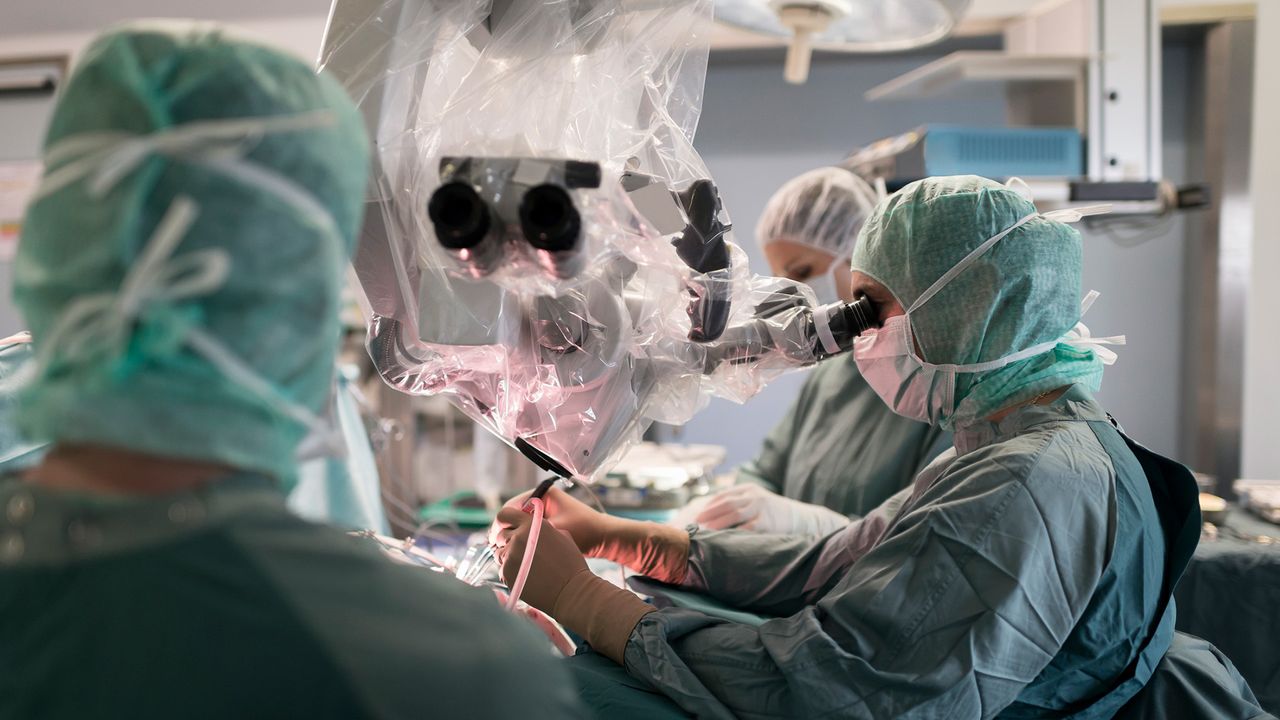
A hypothetical donor brain would need to be removed while preserving its vascular supply, temperature, and oxygenation. Simultaneously, the recipient's own brain must be extracted, leaving the spinal cord stump intact. This step alone presents massive challenges: the brain is encased in the skull, connected by cranial nerves, blood vessels, and the spinal cord. Severing these connections inevitably causes irreversible damage to the brainstem and upper spinal cord—areas critical for basic life functions like breathing and heart rate regulation. Even if the donor brain is kept alive in a lab, attaching it to a recipient's body is biologically untenable because the recipient's spinal cord has been cut, causing paralysis and loss of autonomic control.
Step 2: Aligning the Spinal Cord and Brainstem
Once the donor brain is positioned in the recipient's skull, the next challenge is aligning the severed ends of the spinal cord (from the donor brainstem) with the recipient's spinal cord. As the original text notes, "Lining up donor and recipient nerves for a potential brain transplant is one thing." This is an astronomical understatement. Each nerve tract within the spinal cord consists of thousands of individual axons, each requiring precise topographical alignment to maintain the correct functional pathways. Current microsurgical techniques can suture large nerves (like the sciatic nerve), but the spinal cord's internal structure is far more complex—a millimeter misalignment would result in chaotic connections, leading to loss of motor control, sensory confusion, and chronic pain.
Step 3: Achieving Axonal Regrowth and Synaptic Reconnection
The original text continues: "Getting them to communicate is another." This is the crux of the impossibility. Even if physical alignment were perfect, severed axons within the central nervous system (CNS) do not spontaneously regenerate like those in the peripheral nervous system (PNS). The CNS environment is inhibitory due to molecules such as Nogo-A, myelin-associated glycoprotein, and glial scars that block regeneration. To enable communication, each axon must regrow across the surgical gap and form functional synapses with the correct target neurons—a process requiring guidance cues that are only present during embryonic development. Furthermore, the speed of regeneration is millimeters per day; for any significant length of spinal cord, it would take years, during which the recipient's body would wither from disuse.
Step 4: Re-establishing Blood Supply and Immune Tolerance
The brain requires a constant, precisely regulated blood supply. Reconnecting the carotid arteries and jugular veins is surgically feasible, but the recipient's immune system would immediately recognize the donor brain as foreign. Even with powerful immunosuppressants, the brain is particularly vulnerable to inflammation, and chronic rejection would lead to encephalitis and death. Additionally, the donor brain's own immune cells (microglia) might attack the recipient's body. No current immunosuppressive regimen can prevent this without causing severe side effects.
Step 5: Functional Integration and Identity Preservation
Assuming all previous steps succeeded, the transplanted brain would need to send motor commands to the recipient's limbs and receive sensory feedback. This requires billions of individual connections to be correct—not just structurally but functionally. The brain's neural circuits are shaped by a lifetime of experiences; after transplantation, the brain would have no "memory" of how to control the new body. Additionally, the recipient's spinal cord would have lost its own neural network, so even if signals reached the cord, they would not propagate to muscles. Finally, the ethical question of identity: would the recipient be the donor's personality in a new body? Or a confused amalgam? Consciousness itself might be lost during the procedure due to the necessary severing of the reticular activating system.
Common Mistakes and Misconceptions
Mistake 1: Assuming Head Transplants Are the Same as Brain Transplants
Some researchers have proposed head transplants (e.g., the controversial HEAVEN project), which involve transplanting the entire head onto a donor body. This is distinct from a brain transplant because the head includes the skull, face, and sensory organs. However, the same fundamental problem—severing and reconnecting the spinal cord—applies, making head transplants equally impossible. The original text's focus on "lining up donor and recipient nerves" applies to both procedures, but the term "brain transplant" implies only the brain is moved, which is even more complex.
Mistake 2: Believing Nerve Regeneration Will Eventually Overcome the Problem
While stem cell therapies and nerve guidance scaffolds show promise for small spinal cord injuries, they cannot repair a complete transection at the brainstem level. The number of axons required to reconnect a whole brain to a spinal cord is orders of magnitude greater than what any therapy can currently achieve. Even if regeneration were possible, the guidance problem—ensuring each axon finds the correct target—remains unsolved for complex CNS circuits.
Mistake 3: Ignoring the Immune Privilege of the Brain
The brain is often described as "immune privileged" because it has fewer immune responses under normal circumstances. However, this privilege is not absolute and is lost during surgery when the blood-brain barrier is breached. Moreover, the recipient's immune system can still mount a response against the donor brain if there is any mismatch in major histocompatibility complex (MHC) markers. The brain is not a privileged sanctuary; it is vulnerable to autoimmune attack.
Mistake 4: Overlooking the Role of the Spinal Cord's Own Neural Network
Many people think the spinal cord is just a bundle of wires. In reality, the spinal cord contains its own local circuits that process sensory and motor information. After a brain transplant, the recipient's spinal cord would have its own damaged neural networks (from the severing), and the donor brain's descending commands might not integrate with these local circuits. This would result in a complete disconnection, no different from a massive spinal cord injury.
Summary
Brain transplantation is not feasible due to three insurmountable barriers: the inability to physically align tens of thousands of nerve fibers in the spinal cord with perfect topographical accuracy, the CNS's intrinsic inability to regenerate axons and form functional synapses across such a gap, and the severe immune and functional integration challenges. Even if surgical techniques improved, the fundamental biological constraints—lack of regeneration cues, immune rejection, and loss of identity—make brain transplants a technological impossibility for the foreseeable future. The original text's simple statement captures the essence: alignment is hard, but communication is impossible.