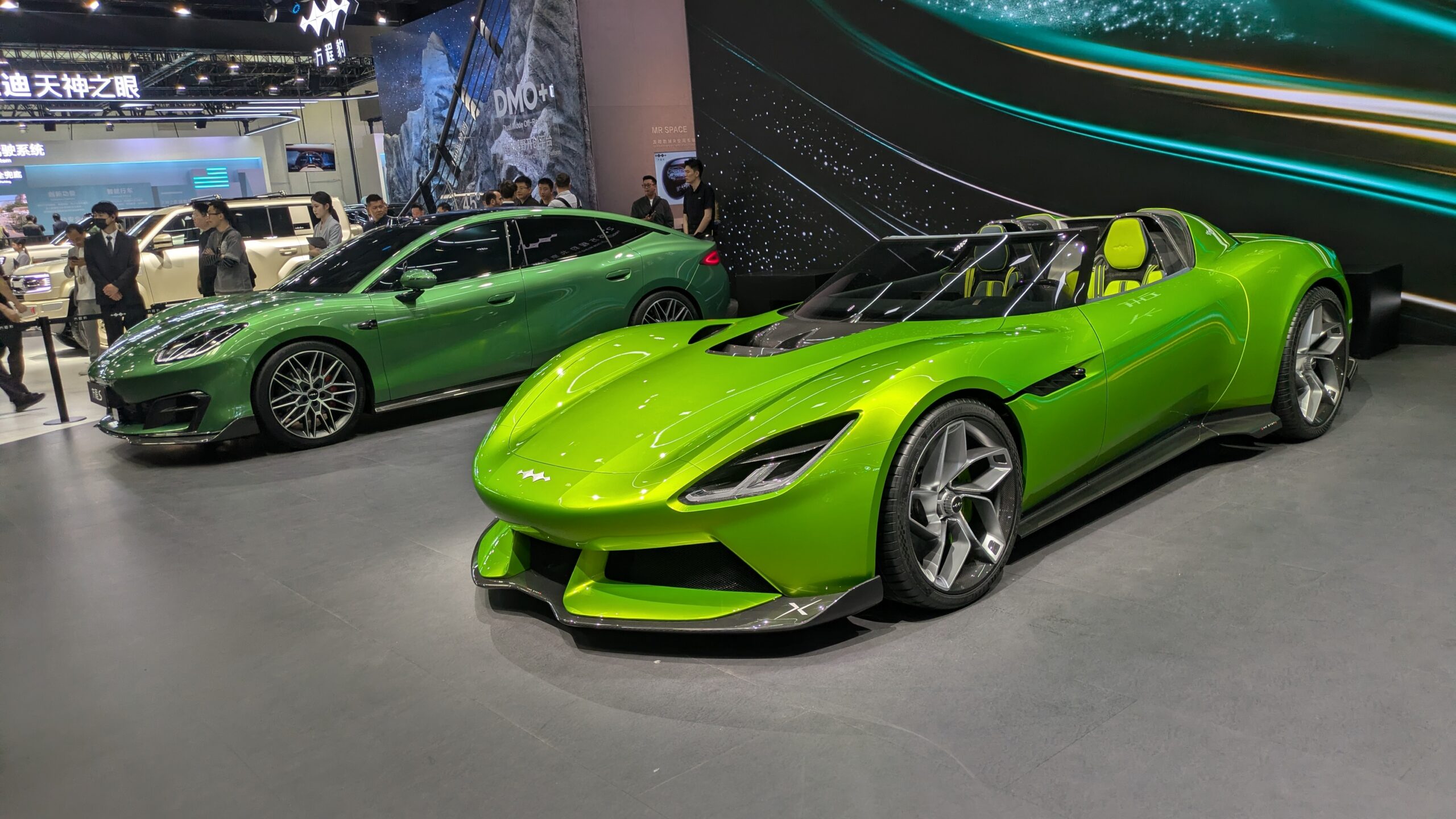
The Beijing Auto Show, officially Auto China, is often synonymous with sprawling SUVs and practical family haulers. While those large, premium vehicles indeed dominated the floor, a parallel narrative emerged: a wave of stunning sports cars and high-performance models that turned heads and sparked excitement. These weren’t just concept curiosities—they signaled a serious shift in China’s automotive appetite, moving beyond subcompacts and toward thrilling, powerful machines. Here are eight key takeaways from the performance cars that outshone the usual subcompacts.
1. Chinese Brands Embrace Electric Sports Cars
Domestic automakers like BYD, Nio, and Xpeng have moved beyond sedans and SUVs to develop dedicated electric sports cars. The BYD Yangwang U9, for example, combines a quad-motor setup with a sub-2.9-second zero-to-60 time. These vehicles aren’t just about straight-line speed—they incorporate sophisticated battery packaging, active aerodynamics, and even autonomous driving capabilities tailored for track use. The message is clear: China is no longer just the world’s factory for economy cars; it’s a serious player in high-performance EVs.
2. Luxury Automakers Double Down on Electrified Performance
Porsche, Audi, and Mercedes-Benz all showcased their latest electrified performance models at Beijing. The Porsche Taycan Turbo GT, Audi e-tron GT, and Mercedes-AMG EQS 53 were each given prominent display space, emphasizing that legacy luxury brands are committed to high-performance EVs. The move highlights a growing consumer demand for zero-emission vehicles that still deliver the thrill of a sports car—pushing subcompacts further to the sideline.
3. Subcompacts Fade as Performance Takes Centre Stage
Once the backbone of the Chinese market, subcompact cars were conspicuously absent from many brand stands. Instead, automakers focused on sporty coupes, supercars, and performance SUVs. This shift reflects changing buyer priorities: younger Chinese consumers, with more disposable income and enthusiasm for driving excitement, are opting for machines that offer both power and prestige. The Beijing show floor confirmed that the era of the humble hatchback is being replaced by the roar of powerful engines and electric motors.
4. Hybrid Supercars from Traditional Sports Car Makers
Ferrari, Lamborghini, and McLaren each unveiled new hybrid V8 and V12 models in Beijing. These plug-in hybrids combine ICE performance with electric torque, delivering breathtaking acceleration while meeting emerging emission regulations. The Lamborghini Revuelto, for instance, features a 6.5L V12 paired with three electric motors. Their presence at the show underscores that even the most iconic sports car brands see China as a key market for their latest innovations, not merely a place for volume sales.
5. Autonomous Tech Meets Track-Ready Engineering
Several concept sports cars at the show integrated advanced driver-assistance systems (ADAS) optimized for high-speed driving. Nio’s EP9 successor, for example, features LiDAR sensors and AI algorithms that can learn a racing line and adjust suspension settings in real time. This merge of autonomous technology and performance creates a new category: self-aware sports cars that can help drivers push limits safely. It’s a clear departure from the stripped-down, driver-only subcompacts of the past.
6. Lightweight Materials Become Mainstream in Chinese Performance Cars
Carbon fiber monocoques, aluminum spaceframes, and titanium exhausts are no longer reserved for six-figure hypercars. Chinese brands like Li Auto and Zeekr unveiled affordable performance coupes using extensive carbon fiber panels to keep weight low and agility high. The shift reduces the weight penalty typically associated with large battery packs, enabling sporty handling comparable to gasoline rivals. This material innovation is a direct response to the demand for engaging driving dynamics—something subcompacts rarely offer.
7. Affordable Sporty EVs Target the Mass Market
Not all performance cars at the show were exotic. Several affordable sporty EVs, priced under ¥200,000 (~$28,000), were launched. Examples include the MG Cyberster and the Ora Punk Cat—both offering rear-wheel drive, quick acceleration, and sporty styling. These models aim to make performance accessible to a broader audience, blurring the line between sports car and daily driver. Their presence indicates that China’s EV revolution isn’t just about range; it’s about making driving fun for everyone.
8. The Future of Chinese Performance: A Market Transformed
From concept to production, the sports cars at the Beijing Auto Show tell a story of transformation. The days when subcompacts defined the Chinese market are fading. Today, consumers want speed, style, and sustainable technology—and automakers are delivering. With Chinese brands leading innovation in electric performance and legacy manufacturers tailoring their most exotic models for Chinese tastes, the show proves that high performance is no longer an afterthought in Asia. The next generation of sports cars will likely be born here.
The Beijing Auto Show has traditionally been a showcase for practical vehicles, but this year’s gathering turned a new leaf. As large SUVs and subcompacts took a backseat, the spotlight shone brightly on sporty cars, hybrids, and electric performance machines. Whether domestic or international, every automaker recognized that Chinese enthusiasts crave excitement, speed, and cutting-edge technology. The subcompact era is slowly giving way to a thrilling new chapter—one where sporty cars outshine everything else on the stand.