For coffee enthusiasts, the quest for the perfect cup is a never-ending pursuit of flavor, aroma, and consistency. Now, researchers at the University of Oregon, led by chemist Christopher Hendon, are exploring an unexpected tool to measure coffee's taste profile: electricity. Their findings, published in Nature Communications, suggest that a simple electrical current sent through a coffee sample could reveal the same information as a professional tasting panel. This breakthrough builds on years of work to demystify the science behind brewing, including a 2020 mathematical model for espresso extraction.
The Chemistry of Coffee Flavor
What makes a great cup of coffee? The answer lies in roughly 2,000 different compounds extracted from ground beans during brewing. These include acids, sugars, oils, and caffeine, each contributing to the final taste. Baristas face a monumental challenge: replicating a perfect brew consistently, as small variations in water temperature, pressure, grind size, and time can drastically alter the flavor balance.
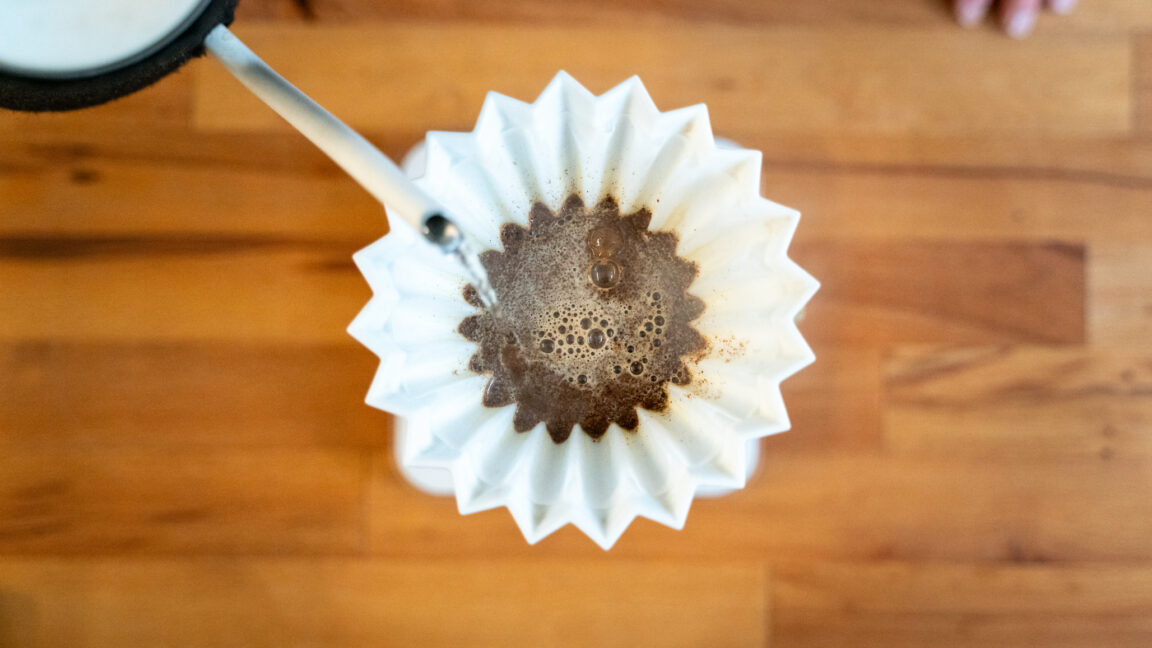
Hendon's previous research tackled this problem by focusing on extraction yield (EY)—the percentage of coffee grounds that dissolves into the water. His team developed a mathematical model to predict EY based on water flow and pressure, drawing an analogy with how lithium ions move through battery electrodes. This model helped minimize waste while producing espresso with reproducible quality.
A New Way to Measure Taste: Electrical Current
The latest innovation moves beyond mathematical modeling to real-time measurement. By passing a low-voltage electrical current through a cup of coffee, Hendon and his colleagues can analyze how the beverage's compounds affect electrical conductivity. Different flavor molecules—such as chlorogenic acids and caffeine—alter the resistance of the liquid in distinctive ways. The resulting 'electrical fingerprint' correlates strongly with traditional sensory evaluation, offering a faster, cheaper, and more objective assessment.
To validate their method, the team compared electrical readings from dozens of coffee samples with results from trained tasters. The correlation was strikingly high, suggesting that a simple handheld device could one day allow baristas to dial in the perfect extraction without extensive taste testing. This approach not only speeds up quality control but also opens the door to automated brewing systems that adjust parameters on the fly.
Why It Works: The Physics of Dissolved Ions
The principle is grounded in basic chemistry: dissolved solids in coffee—ions from acids and salts—conduct electricity. The more compounds extracted, the higher the conductivity—up to a point. However, some bitter compounds (like certain phenolics) have lower mobility, creating a unique conductance signature. By measuring AC impedance across a range of frequencies, the researchers can differentiate between desirable and undesirable extraction levels.
Implications for Home Brewers and Cafés
While the study is still in its early stages, the potential applications are vast. For commercial cafés, a simple probe could replace subjective cupping sessions, ensuring every shot of espresso meets their recipe. Home brewers could use a smartphone-attached sensor to tweak grind size or water temperature instantly. The technology might also help coffee roasters monitor batch consistency during production, reducing waste and improving profits.
Beyond coffee, the same electrical characterization technique could be applied to other beverages—like tea, beer, or wine—where flavor complexity is governed by extraction processes. Hendon's lab is already exploring collaborations with food science departments to expand the method's scope.
What's Next: From Lab to Latte
The next steps involve miniaturizing the hardware and developing user-friendly software. Hendon envisions a device that looks like a standard thermometer but provides real-time feedback on extraction yield and taste balance. He also notes that the technique must be tested on a wider variety of coffee origins and roast profiles to confirm its robustness.
In parallel, the team is refining their mathematical model from 2020, integrating the new electrical data to create a comprehensive digital twin of the brewing process. This could lead to 'self-learning' espresso machines that adapt to each batch of beans, promising a future where the perfect cup is not a matter of luck but of precise science.
For now, Hendon encourages coffee lovers to embrace the journey of discovery. "We're not trying to replace the art of coffee making," he says, "but to give baristas and home brewers a reliable tool to understand what's happening inside the cup." And if that tool happens to involve a little jolt of electricity, so much the better.